The World’s Best Museums (and How to See Them)
The best museums in the world are bucket-list destinations in their own right. Here’s where to go and how to make them part of your next trip.

A lot of people walk into a museum because it’s on all the must-see lists, wander aimlessly looking at some sculpture and a few oil paintings, and leave after an hour to grab spritz, cultural obligation fulfilled. No judgment, that’s fine! But some museums, the truly great ones, will actually leave you really inspired. You round a corner and suddenly you’re staring up at the ceiling of the Sistine Chapel or standing in front of King Tut’s golden mask, and you feel the weight of history in a way you didn’t expect.
The world’s best museums aren’t just a collection of old stuff. They’re experiences. They make you want to read more, travel more, create more. And the good news? A lot of them happen to be in cities that EF Ultimate Break already takes you to. Here’s a guide to the best museums in the world and the trips that get you there.

The Louvre and its famous glass pyramid in Paris, France
Paris, France: The Louvre & Musée d’Orsay
If there’s one city that’s basically synonymous with world-class museums, it’s Paris. The Louvre is the most visited museum in the world, and for good reason. The building alone is worth the visit, a former royal palace turned cultural institution, with a glass pyramid out front designed by the famous architect I.M Pei. Inside, you’ll find over 35,000 works on display, including the Mona Lisa (she’s way smaller than you think), the Venus de Milo, and the Winged Victory of Samothrace.
But don’t sleep on the Musée d’Orsay. Housed in a converted 19th-century railway station right on the Seine, it holds the world’s largest collection of Impressionist and Post-Impressionist masterpieces—Monet, Renoir, Van Gogh, Degas. The building itself is a work of art. If you only have time for one, the Louvre is the bucket-list pick. But if you have a free afternoon, the d’Orsay is where you’ll want to spend it.
EF Ultimate Break’s Rome, Paris & London and Paris: City Experience trips put you in Paris with time to explore both. Your Tour Director can point you in the right direction, and the free time built into the itinerary means you can actually take your time.

The Uffizi Gallery in Florence
Florence, Italy: The Uffizi Gallery & Galleria dell’Accademia
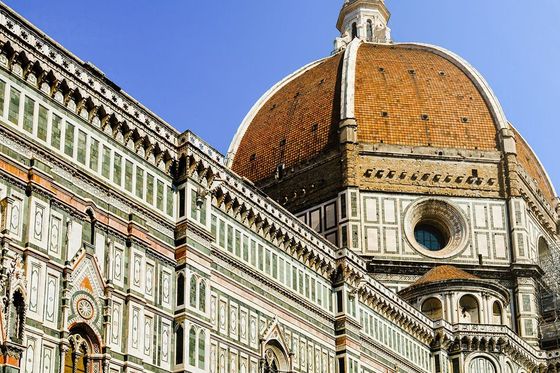
Florence is a city that exists in a permanent state of Renaissance. Walk down almost any street and you’ll pass a church, a palazzo, or a piazza that’s been around for centuries. But the Uffizi Gallery is in a category of its own. It’s one of the oldest and most famous art museums on the planet, home to Botticelli’s The Birth of Venus and Primavera, works by Leonardo da Vinci, Michelangelo, Raphael, and Caravaggio. And it’s a lot, so give yourself time.
A short walk away, the Galleria dell’Accademia is where you’ll find Michelangelo’s David—the real one, not the replica in the Piazza della Signoria. Standing in front of it is one of those moments that’s hard to describe. It’s bigger than you expect, more detailed than you can process, and somehow more moving than any photo has ever conveyed.
Both museums require advance reservations (really though, don’t show up without them), and both are accessible on Ultimate Break’s Venice, Florence & Rome and Ultimate Italy trips. Pro tip: book your museum tickets before you even leave home.

Inside the ruins of the Colosseum in Rome
Rome, Italy: The Vatican Museums & the Colosseum
Technically, the Vatican Museums are in Vatican City—a whole separate country—but they’re easy to get to from Rome. The collection spans 54 galleries and includes some of the most significant art and artifacts in human history. The Sistine Chapel, with Michelangelo’s ceiling fresco, is at the end of the route, and it’s every bit as breathtaking as you can imagine. The Gallery of Maps alone—a long corridor lined with 40 painted maps of Italy—is worth the visit.
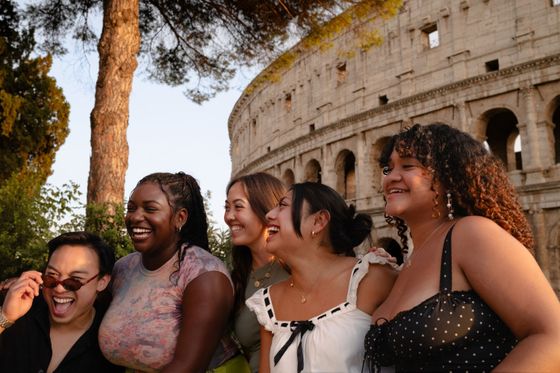
And then there’s the Colosseum, which isn’t a museum in the traditional sense but functions as one of the world’s greatest open-air history exhibits. Standing inside it and imagining the 50,000 people who once filled those seats is an experience that makes history feel present.
Ultimate Break’s Rome, Paris & London, Venice, Florence & Rome, and Ancient Wonders: Cairo, Athens & Rome trips all include Rome, with built-in free time and a Vatican City excursion available as an optional add-on.

The Rijksmuseum Museum in Amsterdam
Amsterdam, Netherlands: The Rijksmuseum & Anne Frank House
Amsterdam has a museum for almost every interest, but two stand out above the rest. The Rijksmuseum is the Netherlands’ national museum of art and history, home to Rembrandt’s The Night Watch and Vermeer’s The Milkmaid, among thousands of other works. The building itself is stunning, and the collection spans 800 years of Dutch history. It’s the kind of place you could spend a full day in and still feel like you missed things.
The Anne Frank House is a different kind of experience—quieter, more personal, and deeply moving. The preserved secret annex where Anne Frank and her family hid during World War II is one of the most significant historical sites in Europe. It’s not a comfortable visit, but it’s an important one. Tickets sell out weeks in advance, so plan ahead.
Amsterdam is a stop on Ultimate Break’s Amsterdam, Paris & London and Ultimate Europe trips, with free time to explore the city’s canals, neighborhoods, and cultural institutions on your own terms.

Statue of Goya at the entrance of the Prado Museum in Madrid
Madrid, Spain: The Prado & Reina Sofía museums
Madrid is a city that earns its reputation as soon as you arrive. The food is incredible, the nightlife bumps until sunrise, and the art scene is world-class. At the center of it all is the Prado Museum, one of the finest art museums in the world and Spain’s most visited cultural institution. The collection focuses on European art from the 12th to early 20th century, with an unmatched concentration of Spanish masters: Velázquez, Goya, El Greco.
A short walk away, the Reina Sofía is home to Picasso’s Guernica—one of the most powerful and politically charged paintings ever made. The museum’s collection of 20th-century Spanish art is wild, and the building itself (a converted 18th-century hospital with a striking modern extension) adds to the experience. Between the Prado and the Reina Sofía, Madrid’s so-called “Golden Triangle of Art” is one of the most concentrated museum districts in the world.
Madrid to Barcelona: Sangria, Tapas & Sunsets and Madrid: City Experience trip put you right in the heart of the city, with guided tours and free time to explore both museums at your own pace.

View of the pyramids from the Grand Egyptian Museum in Cairo
Cairo, Egypt: The Grand Egyptian Museum
The Grand Egyptian Museum is unlike anything else on this list—or anywhere else in the world, actually. Opened in full just recently near the base of the Giza Plateau, it’s the largest archaeological museum on the planet, spanning over 5.2 million square feet (that’s roughly 75 football fields, or twice the size of the Smithsonian). The collection contains over 100,000 artifacts spanning 5,000 years of ancient Egyptian history, including the complete treasures of King Tutankhamun’s tomb—his golden death mask, his throne, his jewelry, all of it, together in one place for the first time.
To stand in front of King Tut’s golden mask, knowing it’s been around since roughly 1323 BCE, will recalibrate your sense of time. And the museum’s scale means there’s always something new to discover, no matter how long you spend inside. This isn’t just one of the best museums in the world right now—it’s one of the most significant cultural openings of the decade.
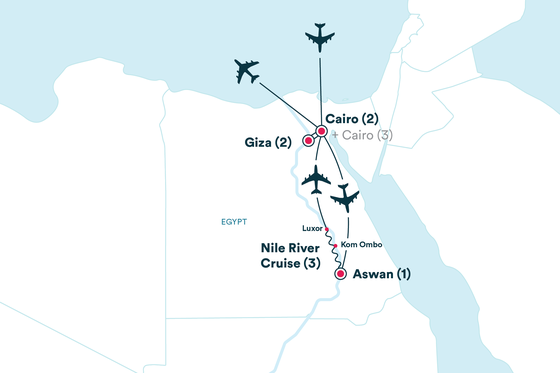
Ancient Wonders: Cairo, Athens & Rome trip includes a guided tour of the Grand Egyptian Museum as part of the itinerary, so you’re not navigating it alone. Egypt Expedition and Egypt: Cruise the Nile trips also include time in Cairo for those who want to go deeper into Egyptian history.

The classical entrance of the British Museum in London
London, England: The British Museum
The British Museum is one of the oldest and most comprehensive museums in the world, and it’s f-r-e-e. But the collection is what sets it apart: over 8 million objects spanning two million years of human history, from the Rosetta Stone to the Elgin Marbles to the Lewis Chessmen. You can spend an entire day moving from ancient Egypt to ancient Greece to medieval Europe without ever leaving the building.
London also has the National Gallery in Trafalgar Square (also free, and home to Van Gogh’s Sunflowers and da Vinci’s Virgin of the Rocks), the Victoria and Albert Museum (the world’s largest museum of art and design), and the Natural History Museum whose dinosaur skeleton is a can’t-miss. London is one of the best museum cities on planet, and the fact that most of the major institutions are free makes it even more accessible.
Rome, Paris & London and London: City Experience include time to explore the city’s neighborhoods, landmarks, and cultural institutions. Your Tour Director can help you prioritize based on your interests—whether that’s ancient history, fine art, or something in between.

An immersive light installtion at teamLab Planets Tokyo
Tokyo, Japan: Ueno Park’s museum district
Tokyo’s Ueno Park is home to one of the most concentrated clusters of amazing museums in the world. The Tokyo National Museum is Japan’s oldest and largest museum, with a collection of over 110,000 objects spanning Japanese art, archaeology, and cultural history. The National Museum of Nature and Science is right next door, and the Tokyo Metropolitan Art Museum rounds out the neighborhood.
But beyond Ueno, Tokyo’s museum scene is endlessly varied. The teamLab digital art installations—teamLab Borderless and teamLab Planets—have become must-visit experiences for anyone interested in immersive, technology-driven art. teamLab is a really unique experience, with rooms that respond to your movement, interactive water exhibits, and thousands of live orchids hanging from the ceiling.
Japan: Tokyo & Beyond and Highlights of Japan trips both include time in Tokyo, with free time built in to explore Ueno Park, Ginza, and the city’s many neighborhoods on your own.
How to make the most of museum visits on a group trip
A few things that make a real difference when you’re visiting major museums on a trip:
Book tickets in advance. The Uffizi, the Anne Frank House, and the Vatican Museums all sell out. Don’t leave it to chance.
Go early or late. The Louvre at opening time is a completely different experience from the Louvre at noon. Same goes for most major museums.
Don’t try to see everything. Pick two or three things you actually want to see and give them your full attention. You’ll remember them.
Use your Tour Director. They know these cities and these museums. Ask them what’s worth your time and what you can skip.
Give yourself time to sit. The best museum experiences often happen when you stop moving and just look at something for a few minutes.
EF Ultimate Break’s itineraries are built with this in mind—guided experiences that give you context and orientation, plus free time to explore at your own pace. You’re not being herded through a checklist. You’re being given the tools to actually experience a place.
The world’s best museums aren’t just on bucket lists—they’re in cities you’re already thinking about visiting. Whether you’re a lifelong art lover or someone who’s never spent more than twenty minutes in a gallery, the right museum in the right city has a way of changing how you see things, which is kind of the whole point of travel.
Key takeaways
The world’s best museums—including the Louvre, the Uffizi, the Vatican Museums, the Prado, the Grand Egyptian Museum, the British Museum, the Rijksmuseum, and the Tokyo National Museum—are all in cities on EF Ultimate Break itineraries.
The Grand Egyptian Museum in Cairo is one of the most significant cultural openings of the decade, housing over 100,000 artifacts including the complete treasures of King Tutankhamun’s tomb.
Advance tickets are essential for top museums like the Uffizi Gallery, Anne Frank House, and Vatican Museums. Book before you leave home.
Going early, focusing on a few key works, and giving yourself time to sit and absorb what you’re seeing will make your museum visits far more memorable than trying to see everything.
EF Ultimate Break’s itineraries include guided cultural experiences plus free time, so you can explore museums at your own pace without sacrificing the group experience.
Museum-hopping across multiple cities is one of the best arguments for a multi-destination trip, and EF Ultimate Break makes the logistics easy with flights, hotels, and 24/7 support all included.
Know before you go
Your most-asked questions about visiting the world’s best museums.